Proudly serving Mesa, Tempe, Phoenix, Chandler, Gilbert, Queen Creek & surrounding areasCall or Text 24/7: 602-905-5577
Aerial view of a residential neighborhood with terracotta-roof homes and desert landscaping in Mesa, AZ.

Reverse Osmosis Systems in Mesa, AZ | New Installation and RO Filter Replacement

Mesa Water Softeners installs NSF certified reverse osmosis systems for Mesa, Arizona homes that need cleaner drinking and cooking water. Our team handles under-sink RO installation, whole-house water filter solutions, point-of-use drinking water filtration setups, RO repair, and ongoing filter maintenance. Every recommendation is built around Mesa conditions, including tap water that often tests between 400 and 600 parts per million in total dissolved solids. The goal is simple: purified water at the kitchen faucet without relying on bottled water.

Mesa's mix of Salt River Project surface water and groundwater can bring hardness, sediment, chloramine taste, and high mineral content into your home. We start with custom water testing for hardness, TDS, chlorine or chloramine, iron, sediment load, and pH before recommending equipment. Installations are completed by licensed reverse osmosis technicians following Arizona Registrar of Contractors standards, with clean tubing runs, properly rated shutoff valves, and pressure checks. Schedule a free water test when you want a system sized for your household instead of a generic box from a shelf.

Whether you need a compact under-sink RO system, a higher-output setup for an icemaker, or maintenance for a membrane that is no longer rejecting TDS properly, we can test, install, repair, and service the system from start to finish.

Mesa Water Softeners provides reverse osmosis systems throughout Mesa and the greater Phoenix metro area, including Tempe, Phoenix, Chandler, Gilbert, Queen Creek, and more.

★ ★ ★ ★ ★4.8/5.0 Customer Rating · 21 Years of Water Treatment Experience · 1,000+ Water Systems Serviced · Licensed, Bonded & Insured · Home & Business Water Solutions

Reverse Osmosis Systems & Benefits

What Is Reverse Osmosis?

Reverse osmosis is a point-of-use purification process that pushes water through a semipermeable membrane and routes rejected concentrate water to the drain. In a properly installed system, operating pressure typically sits between 50 and 80 PSI so the membrane can separate dissolved solids from the product water that reaches your glass.

For Mesa homes, RO is useful because it can reduce total dissolved solids, chlorine taste and odor, nitrates, arsenic, lead, fluoride, and other substances commonly discussed in drinking water treatment. A standard three- to five-stage system uses sediment filtration, carbon filtration, the RO membrane, and often a final polishing filter before water exits the dedicated faucet, with many point-of-use systems producing 50 to 100 gallons per day.

Mesa sits in Maricopa County and receives water from a blend of Salt River Project surface water and groundwater wells. For Mesa's 504,258 residents in the most populous East Valley city and the third largest city in Arizona, that source mix can carry sediment, hardness minerals, and chloramine disinfection residuals, so the pre-filter stages matter just as much as the membrane itself.

Benefits of Reverse Osmosis for Mesa Drinking Water

A correctly sized RO system gives Mesa households a practical way to improve drinking water quality where it matters most: the kitchen tap. Instead of treating every gallon in the house to drinking-water purity, the RO system focuses on water used for drinking, cooking, coffee, tea, ice, and pets.

  • Addresses TDS levels that often run 400 to 600 ppm and can exceed the EPA secondary standard of 500 mg/L
  • Improves taste and odor tied to chlorine, chloramine, and mineral content
  • Targets dissolved contaminants such as nitrates, arsenic, lead, and fluoride
  • Provides a dedicated drinking water faucet at the sink
  • Pairs well with a water softener to protect the RO membrane from scale
  • Cuts down on bottled water storage, hauling, and plastic waste
  • Uses sediment and carbon pre-filtration before water reaches the membrane
  • Supports predictable maintenance with 6 to 12 month pre-filter service intervals
RO Services

Reverse Osmosis Services

Mesa Water Softeners installs, repairs, and maintains reverse osmosis systems for homes across Mesa and the East Valley. Our work covers under-sink units, drinking water filtration setups, whole-house filter pairings, RO filter changes, membrane replacement, and troubleshooting for low production, leaks, or poor taste.

Under-Sink RO Installation

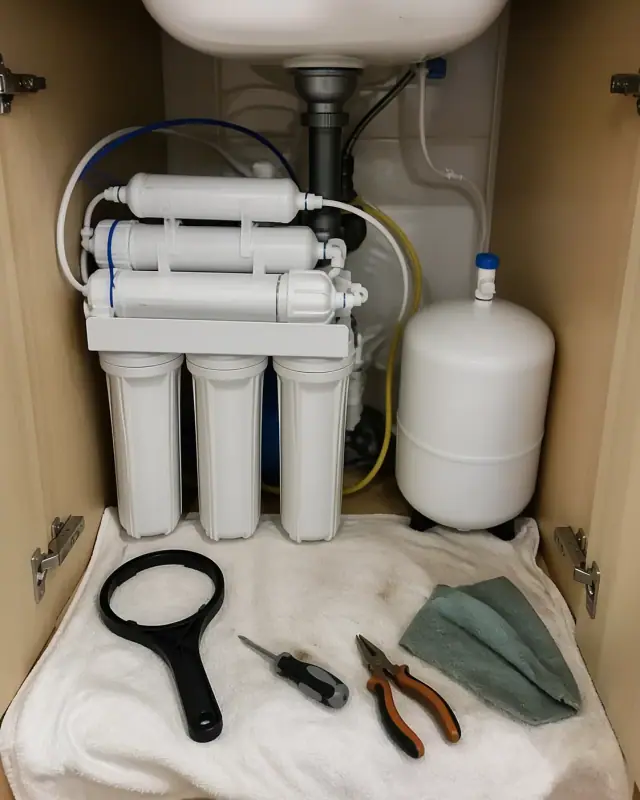
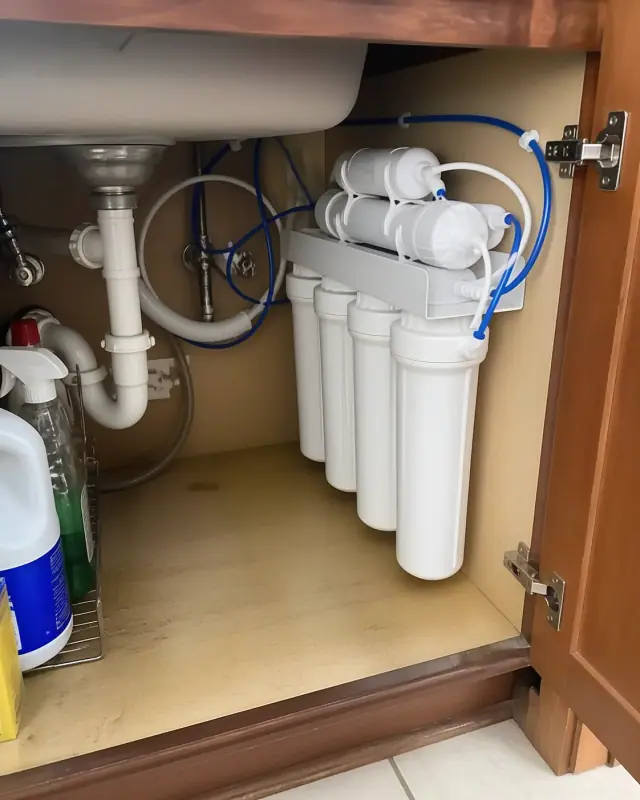
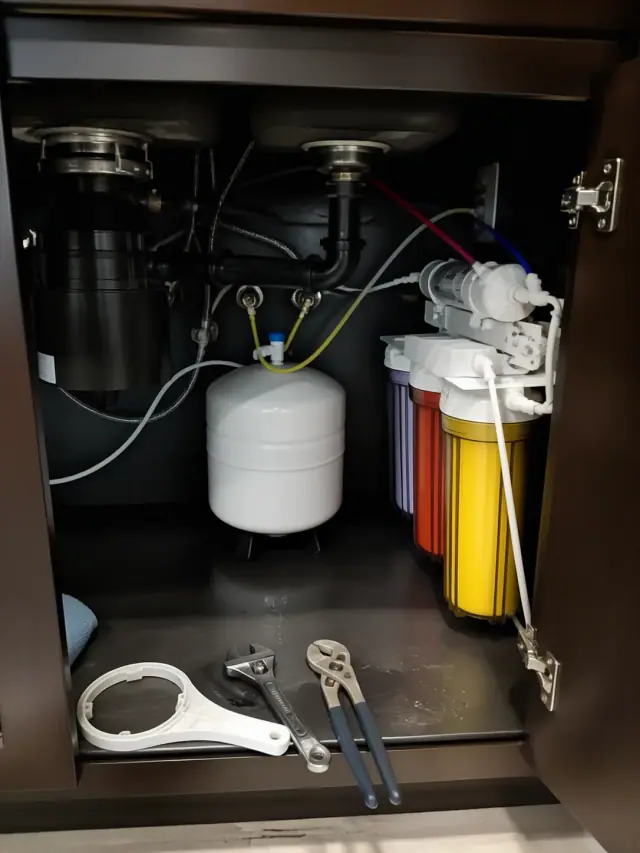
Reverse osmosis water filtration system installed under a kitchen cabinet in Mesa, AZ.

An under-sink RO system is the most budget-friendly fit for many Mesa kitchens. The unit fits inside the cabinet, connects to the cold supply line, sends purified water to a dedicated faucet, and stores finished water in a tank that commonly holds 2 to 4 gallons for daily drinking and cooking.

Request Estimate

Whole-House Water Filter Solutions

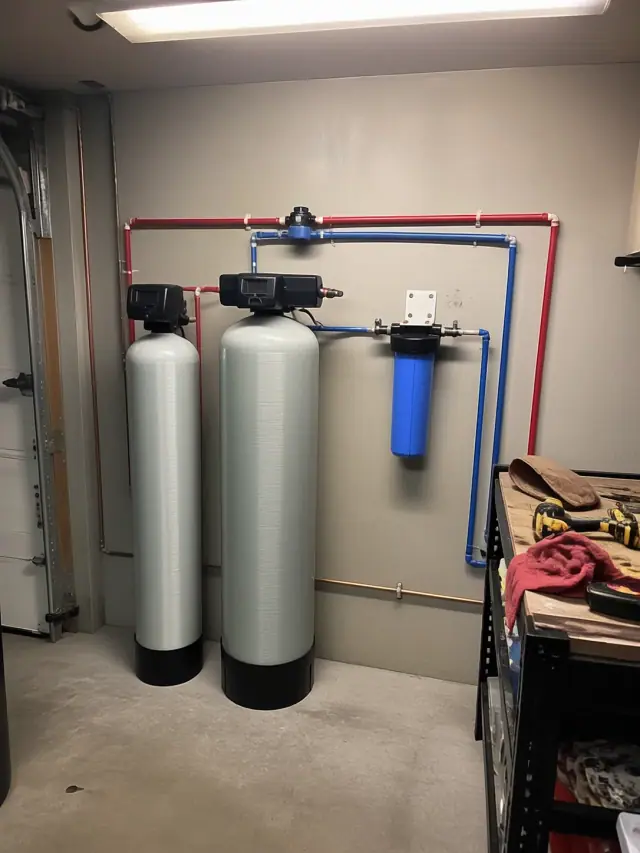
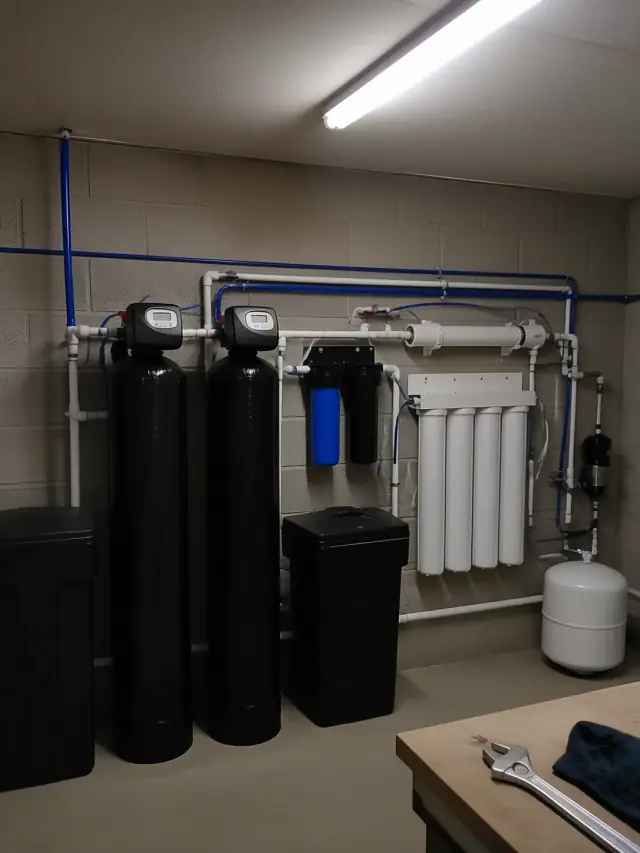
Whole-house water filtration system with tanks and blue filter housing installed in a garage in Mesa, AZ.

Whole-house filtration treats every outlet in the home, while reverse osmosis produces the highest-purity water at the point of use. We often pair whole-house carbon or sediment filtration with a kitchen RO system so showers, laundry, appliances, and drinking water each get the right level of treatment.

Request Estimate

Point-of-Use Drinking Water Filtration

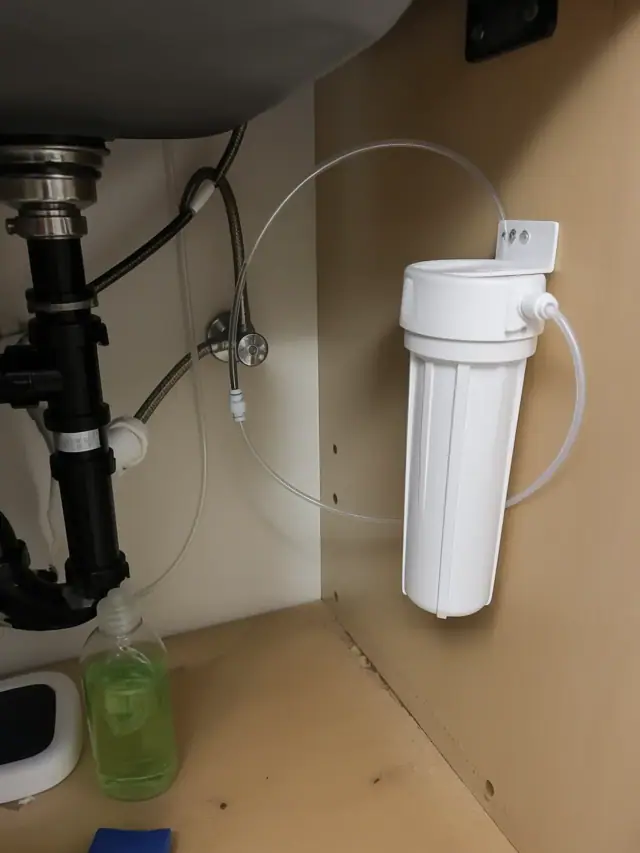
Water filtration system installed under a kitchen sink in a Mesa, AZ home.

Point-of-use RO focuses treatment at the sink, refrigerator line, or dispenser where water is actually consumed. This setup is ideal for households that want cleaner drinking water without adding unnecessary RO treatment to irrigation, laundry, or bathroom fixtures.

Request Estimate

Emergency RO Repair

Reverse osmosis system repair under a kitchen sink cabinet in Mesa, AZ.

When an RO system leaks, runs constantly, produces slow flow, or delivers water that tastes off, the cause is often a fitting, shutoff valve, drain saddle, storage tank, carbon filter, or exhausted membrane. We inspect the system, test pressure and TDS, and repair the issue without replacing equipment that can still be restored.

Request Estimate

RO Filter Change & Maintenance

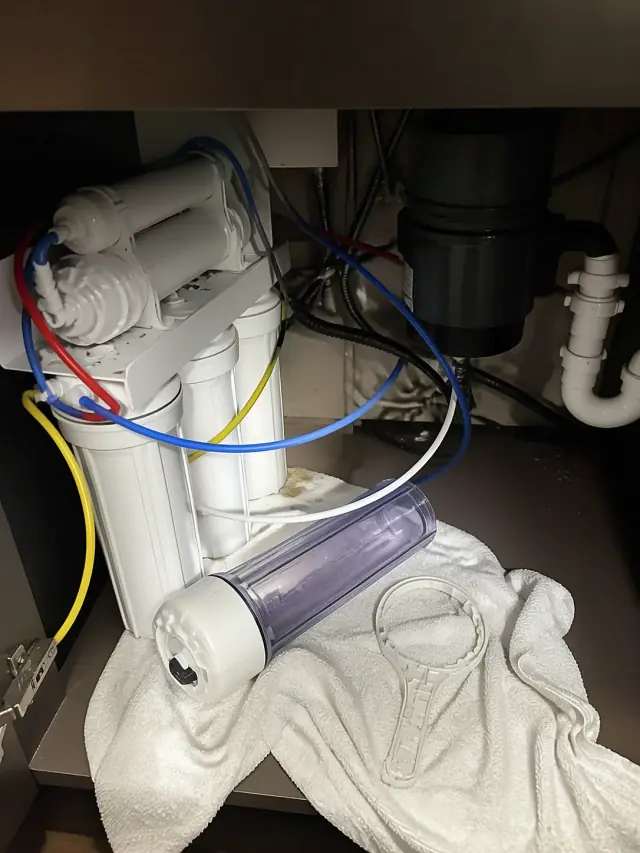
Freshly serviced reverse osmosis water filter system under a kitchen sink in a Mesa, AZ home.

Sediment and carbon pre-filters in Mesa homes usually need replacement every 6 to 12 months, while post-carbon polishing filters are commonly serviced annually. Keeping filters fresh protects taste, flow rate, and membrane life in chloraminated, high-TDS water.

Request Estimate

Membrane Replacement & TDS Testing

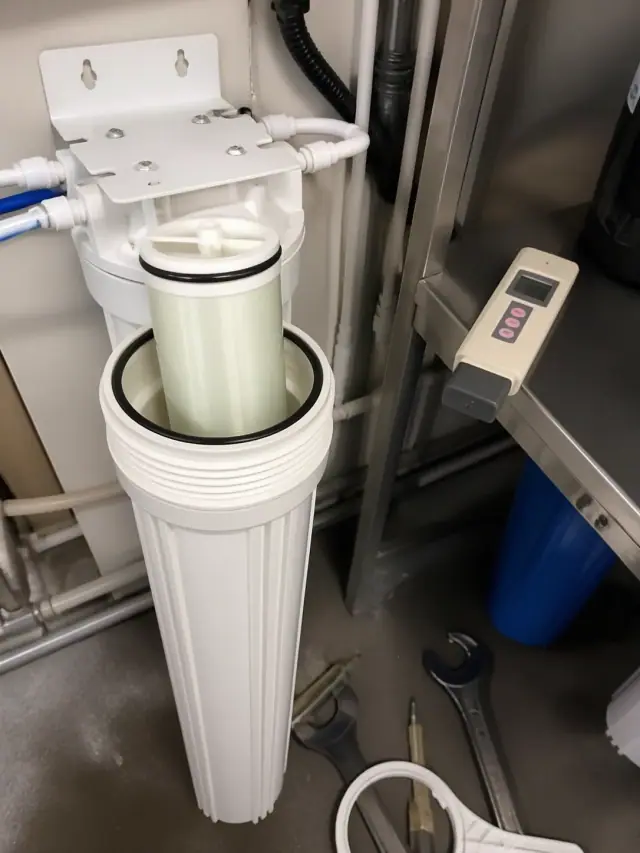
Water filtration system maintenance in a Mesa, AZ office utility room showing a new membrane and digital TDS meter.

A thin-film composite RO membrane typically lasts two to five years, but Mesa conditions without pre-softening can make two to three years a more realistic service interval. We test feed and product water TDS to confirm whether the membrane is still rejecting dissolved solids before recommending replacement.

Request Estimate
RO System Types

Types of Reverse Osmosis Systems

The right RO setup depends on where the water will be used, how many people are in the home, whether a refrigerator or icemaker will be connected, and what your water test shows for TDS, hardness, chloramine, sediment, iron, and pressure. We size the membrane, tank, pre-filters, and add-ons around those actual conditions.

Under-sink water filtration system installed in a kitchen cabinet in Mesa, AZ.

Standard Five-Stage Under-Sink RO

A five-stage under-sink RO system is the workhorse option for most Mesa households. It combines sediment filtration, carbon filtration, a high-rejection RO membrane, storage, and a final taste-polishing stage in a compact cabinet installation.

  • 5-micron sediment pre-filter captures rust, sand, and suspended particles
  • Carbon block or catalytic carbon stages reduce chlorine, chloramine, VOCs, and taste compounds
  • RO membrane rated around 0.0001 microns rejects dissolved salts and metals
  • Post-carbon polishing filter improves the final taste before water reaches the faucet
  • A 50 GPD membrane is often adequate for two to four people using RO for drinking and cooking
Request RO Estimate
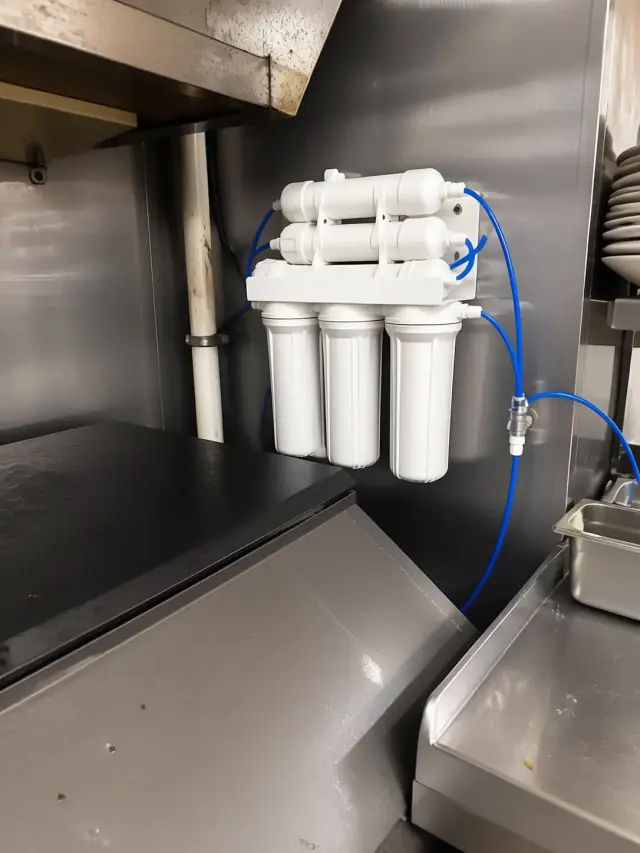
Reverse osmosis water filtration system installed on a stainless steel wall in a Mesa, AZ restaurant kitchen.

High-Output RO for Icemakers & Dispensers

Larger households or kitchens that feed a refrigerator icemaker may need more output than a basic system can recover during heavy use. We can size the system with a higher-output membrane, larger storage, or a pump when pressure and demand call for it.

  • 75 or 100 GPD membranes help reduce recovery lag for higher-demand use
  • Larger storage tanks support drinking faucets, dispensers, and icemaker lines
  • Standard 1/4-inch tubing can be routed from the RO product line to the refrigerator
  • A permeate pump or booster pump can help when supply pressure is low
  • A membrane rated at 50 GPD at 250 TDS may produce less at Mesa's typical 500 TDS feed water
Request RO Estimate
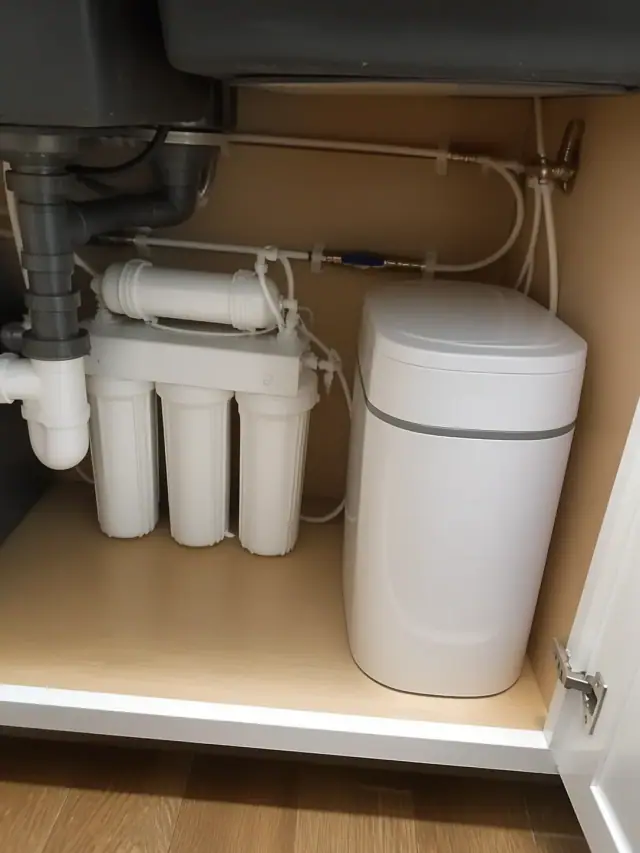
A compact water filtration system and softener installed under a kitchen sink in a home in Mesa, AZ.

RO With Water Softener Pretreatment

Hard water is one of the biggest membrane stressors in Mesa. Putting a water softener upstream of the RO system removes hardness minerals before they can scale the membrane surface and reduce rejection performance.

  • Mesa hardness commonly measures 15 to 25 grains per gallon depending on source blend and season
  • RO membranes reject calcium and magnesium at rates typically above 95%
  • Softener pretreatment reduces carbonate scaling on the membrane surface
  • Demand-initiated softeners and five-stage RO systems work well as a complete treatment pair
  • Pretreatment helps maintain flow, taste, and membrane service life in very hard water
Request RO Estimate
Whole-house water filtration and reverse osmosis system installed on a garage wall in Mesa, AZ.

Whole-House Carbon Filtration Plus RO

A whole-house filter and an RO system solve different problems. The whole-house side can reduce sediment and taste-related compounds throughout the home, while the RO system produces low-TDS water at the faucet used for drinking and cooking.

  • Whole-house filtration serves showers, laundry, appliances, and general fixtures
  • Kitchen RO focuses the highest level of purity where water is consumed
  • Carbon filtration can reduce disinfectant taste before water reaches the point-of-use system
  • Systems can be plumbed independently or coordinated with other treatment equipment
  • This combination is often the right fit for city water with both hardness and taste concerns
Request RO Estimate
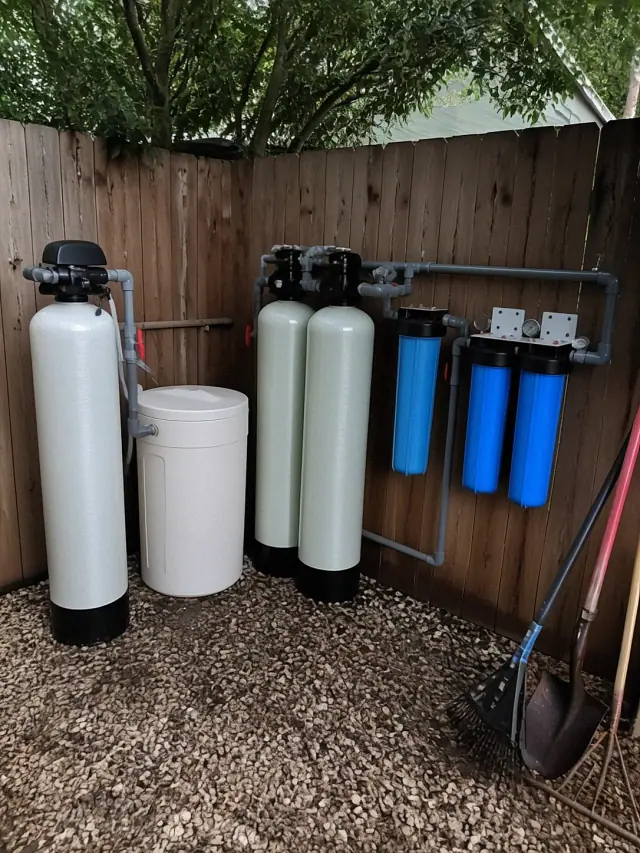
Well water RO pretreatment system with white tanks and blue filters installed against a fence in a Mesa, AZ backyard.

Well Water RO Pretreatment Systems

Homes near Mesa's eastern edges or properties drawing from private wells need testing before a standard RO system is installed. Iron, manganese, hydrogen sulfide, and sediment can foul a membrane quickly unless the water is pre-treated first.

  • Sediment filters help remove particulate before it reaches the RO pre-filters
  • Iron reduction media may be needed when well water carries elevated iron
  • Pretreatment protects the RO membrane from fouling within weeks on high-iron water
  • Testing identifies whether pH, sediment load, and mineral content need correction first
  • Whole-house pre-treatment can prepare well water for reliable point-of-use RO performance
Request RO Estimate
Finding Your Right Fit

Choosing the Right Reverse Osmosis System

A good RO recommendation is not just about the number of filter stages on the box. We look at your household size, fixture goals, refrigerator connection needs, water pressure, Mesa neighborhood water profile, and test results for hardness, TDS, chloramine, iron, sediment, and pH before choosing a system.

Custom Water Testing First

Every project starts with testing at the home, not a generic regional guess. We measure the water conditions that affect membrane selection, pre-filter choice, pressure protection, and long-term maintenance.

Mesa Water Knowledge

Mesa water can vary between homes near the Granite Reef delivery corridor, the western side near Tempe, and newer areas bordering Gilbert and Chandler. That local variation is why we match pre-filtration and membrane output to the home instead of treating every installation the same.

Licensed Clean Installation

Our licensed reverse osmosis technicians use organized tubing layouts, rated shutoff valves, proper drain connections, and pressure checks before the cabinet is closed. The result is a cleaner installation and fewer avoidable leaks or premature component failures.

What Sets Us Apart

Why Choose Mesa Water Softeners for Reverse Osmosis Service?

As a family owned RO services company rooted in the East Valley, we understand the hard, high-TDS, chloraminated water conditions Mesa homeowners deal with every day. You get a real water test, equipment sized to actual demand, clear upfront pricing, and service support for filter changes, membrane replacement, repairs, and future troubleshooting.

Get a Free Water Test

High TDS and Mineral Buildup

Mesa tap water regularly measures high in total dissolved solids, and that mineral load can affect taste, coffee, ice, and appliance-scale concerns. RO lowers TDS at the drinking water point so the water you consume is cleaner and more consistent.

Chloramine Taste and Odor

Arizona surface water treatment often relies on chloramine disinfection, which does not behave like free chlorine in a simple carbon filter. Without the right carbon pre-filtration, chloramine exposure can degrade thin-film composite membranes and cut life from a typical three to five years to as little as one year.

Short Membrane Life from Scaling

Hardness above 15 grains per gallon is common across Mesa, and scale can gradually coat the RO membrane surface. Without the right pre-treatment, rejection drops and the membrane may need replacement sooner than expected.

Low Pressure or Slow RO Production

Standard RO systems perform best with adequate feed pressure, and production slows sharply below 40 PSI. We check pressure before installation and can add a pump or regulator when pressure is too low or too high for safe operation.

Sediment, Iron, and Well Water Fouling

Private well and edge-of-city properties can bring sediment, iron, manganese, or hydrogen sulfide into the system. Those problems need pre-treatment before the water reaches the RO membrane, or fouling can happen quickly.

DIY Leaks and Drain Connection Problems

Small RO tubing, drain saddles, and push-fit fittings can leak slowly when they are not seated or placed correctly. Professional setup helps prevent cabinet damage, backflow-prone drain placements, and loose connections that show up weeks later.

How It Works

Our Reverse Osmosis Process

Our installation process is built to prevent the common failures that shorten membrane life or damage sink cabinets. We test the water, verify pressure, choose the correct components, install the plumbing cleanly, and confirm system performance before turning it over to you.

01.

Water Test and Pressure Reading

We test hardness, TDS, chlorine or chloramine, iron, sediment, and pH, then take a pressure reading at the cold supply. If feed pressure exceeds 80 PSI, we address pressure regulation before connecting the RO system.

02.

System Sizing and Upfront Pricing

We size the system around household demand, feed water quality, refrigerator connections, and membrane output needs. You receive clear pricing before work begins, including any pump, faucet, drain, or valve requirements.

03.

Cabinet Prep and Component Mounting

We review the under-sink plumbing layout, place the filter assembly where it can be serviced, and organize the tubing so filters, tanks, shutoffs, and drains remain accessible.

04.

Faucet, Tank, Feed, and Drain Connections

We connect the cold-water feed, route product water to the storage tank and dedicated faucet, and place the drain connection above the P-trap. Faucet installation through an existing knockout or a new sink-deck hole is part of standard installation when needed.

05.

Pressure Testing and Startup

Each tubing connection is seated, pressurized, and inspected before the cabinet is closed. We also confirm the auto shutoff valve works so the system stops producing water when the storage tank reaches about two-thirds capacity.

06.

Filter Service and Performance Checks

After installation, we remain available for filter changes, TDS testing, membrane replacement, and troubleshooting. Annual service helps catch exhausted carbon, sediment restriction, and declining rejection before water quality noticeably changes.

Get Cleaner Drinking Water

Schedule a Reverse
Osmosis
Consultation

Start with a free water test and a clear recommendation for your Mesa home. We can help you compare under-sink RO, whole-house filtration pairings, membrane replacement, repair options, and maintenance plans based on real water conditions rather than guesswork.

RO Service Help

Reverse Osmosis FAQs

Have questions about reverse osmosis installation, cost, pressure, filter changes, icemaker connections, or Mesa water conditions? These answers cover the most common details we review before installing or servicing an RO system.

Call Our RO Experts

RO faucets connect to the product water line from the storage tank using standard 1/4-inch tubing. The faucet usually mounts through a dedicated sink or countertop hole, commonly about 1-3/8 inches in diameter, and no separate hot or cold supply line is required.

A standard under-sink RO installation at a Mesa home typically takes two to three hours, including pressure checks, plumbing connections, faucet installation, and final testing. Installations that require countertop drilling, longer drain routing, or a new angle stop valve can take closer to three to four hours.

RO systems operate most efficiently with feed water pressure between 60 and 80 PSI. Below 40 PSI, production slows and recovery drops; above 80 PSI, a pressure regulator may be needed to protect the membrane, tank, and fittings.

Professional under-sink RO installation in Mesa typically ranges from $436 to $873 for a standard point-of-use system including materials and labor. More capable systems with additional stages, higher GPD membranes, or permeate pumps can fall in the $800 to $1,500 range, while whole-house RO or integrated systems can reach $1,000 to $3,000. Annual operating costs after installation are primarily filter media, typically $60 to $150 per year depending on system stage configuration and water conditions.

Sediment and carbon pre-filters should usually be replaced every 6 to 12 months in Mesa conditions, and post-carbon polishing filters typically align with annual service. The RO membrane usually lasts two to five years, but high TDS, hard water, and chloramine exposure can shorten that interval.

Yes, many under-sink RO systems can be teed from the product water line to a refrigerator icemaker or cold-water dispenser using 1/4-inch tubing. Larger households or icemaker connections may need a 75 or 100 GPD membrane or a larger storage tank to avoid recovery lag.

Arizona does not require a licensed plumber for every point-of-use RO installation, but work that modifies supply lines, adds angle stop valves, or changes drain connections can fall under Arizona Registrar of Contractors requirements. Using licensed reverse osmosis technicians helps protect the installation and keeps plumbing work compliant when those requirements apply.

RO systems can reduce total dissolved solids, chlorine taste and odor, nitrates, arsenic, lead, fluoride, and dissolved salts when properly installed and maintained. A properly performing RO membrane can reduce arsenic at levels up to 99%, while actual performance still depends on membrane condition, pressure, pre-filtration, and regular filter changes.

Yes, hard water can scale the membrane surface and reduce rejection efficiency over time. Mesa hardness commonly falls in the 15 to 25 grains per gallon range, so a water softener ahead of the RO system can help protect the membrane and maintain performance.

An under-sink RO system treats water at one point of use, usually the kitchen sink, and produces purified water for drinking and cooking. A whole-house filter treats water for every outlet, including showers, laundry, and appliances, but it does not replace the high-purity function of a drinking-water RO system.

Mesa water can contain chloramine disinfectant, and chloramine is harder for standard activated carbon to reduce efficiently than free chlorine. Catalytic carbon pre-filtration helps protect thin-film composite membranes from chloramine exposure and supports better taste.

Yes, but well water needs testing before an RO system is selected. Elevated sediment, iron, manganese, or hydrogen sulfide can foul a standard RO membrane quickly, so whole-house pre-treatment may be required before the water reaches the RO system.

Sizing depends on household size, usage, feed water TDS, pressure, and whether the system will feed only a faucet or also an icemaker or dispenser. A 50 GPD membrane is often adequate for two to four people using RO for drinking and cooking, while larger demands may call for 75 or 100 GPD output and additional storage.