Proudly serving Mesa, Tempe, Phoenix, Chandler, Gilbert, Queen Creek & surrounding areasCall or Text 24/7: 602-905-5577
Aerial view of a residential neighborhood with terracotta-roof homes and desert landscaping in Mesa, AZ.

Commercial Water Softener Installation in Mesa, AZ | Systems, Service & Maintenance

Mesa Water Softeners installs commercial water softener systems in Mesa, Arizona, for restaurants, hotels, medical offices, laundromats, manufacturing facilities, and other businesses that rely on treated water. We handle whole-building water softener installation, targeted high-flow equipment protection, and multi-tank commercial systems for continuous operation. Every project starts with water testing and system sizing so the equipment matches your facility's actual hardness, flow rate, and daily demand.

Mesa's municipal water routinely tests between 16 and 25 grains per gallon, which can scale water heaters, dishwashers, boilers, ice machines, and plumbing. Our team measures hardness, chlorine, iron, sediment, and pH before recommending equipment, then installs demand-initiated systems that regenerate only when needed. You get clean plumbing layouts, proper bypass valves, pressure-tested connections, upfront pricing, startup support, and training for your staff.

Call to schedule your free water test and site consultation. We will review your facility, explain the best commercial water softener options, and provide clear pricing before installation begins.

Mesa Water Softeners provides commercial water softener installation throughout Mesa and the greater Phoenix metro area, including Tempe, Chandler, Gilbert, and Apache Junction.

★ ★ ★ ★ ★4.8/5.0 Customer Rating · 21 Years of Water Treatment Experience · 1,000+ Water Systems Serviced · Licensed, Bonded & Insured · Home & Business Water Solutions

Commercial Water Softener Systems & Benefits

What Is Commercial Water Softener Installation?

Commercial water softener installation connects a properly sized treatment system to your building's water supply so hard-water minerals are removed before they reach equipment, fixtures, and processes. In Mesa, that usually means an ion exchange system that removes calcium and magnesium from high-hardness municipal water before scale can form.

A commercial installation is not simply a larger version of a home softener. The system must be selected for peak gallons-per-minute demand, daily water volume, regeneration timing, drain capacity, salt storage, bypass plumbing, and the consequences of downtime in your facility.

Residential systems typically support about 7 to 10 gallons per minute under household demand, while commercial systems may process hundreds or thousands of gallons every hour. For high-demand Mesa businesses, we install heavy-duty control valves, larger resin tanks, high-capacity brine systems, and multi-tank arrangements when uninterrupted soft water is required.

Benefits of Commercial Water Softener Installation

The right commercial water softener reduces the hidden costs of hard water across your operation. Properly treated water helps protect expensive equipment, reduce scale-related service calls, improve cleaning results, and keep water-using systems running more consistently during peak demand.

  • Protect water heaters, boilers, dishwashers, ice machines, espresso equipment, and plumbing from scale buildup.
  • Maintain stronger flow rates by reducing mineral deposits that narrow pipe interiors over time.
  • Improve dishwashing and glassware results by reducing spotting, clouding, and clogged spray jets.
  • Lower energy waste caused when scale insulates heating elements and forces equipment to work harder.
  • Reduce unnecessary salt and water use with demand-initiated regeneration that responds to actual usage.
  • Support commercial kitchens, hotel laundries, manufacturing processes, medical offices, laundromats, and car washes.
  • Extend equipment life when the system is professionally sized, installed, and maintained.
  • Create a better foundation for reverse osmosis, carbon filtration, or other commercial water treatment stages.
Commercial Water Softeners

Commercial Water Softener Services

We provide commercial water softener installation, replacement, repair, and long-term support for Mesa businesses with serious hard-water exposure. Each service is built around tested water quality, peak-flow calculations, equipment protection goals, and the practical layout of your facility.

High-Capacity Water Softener Installation

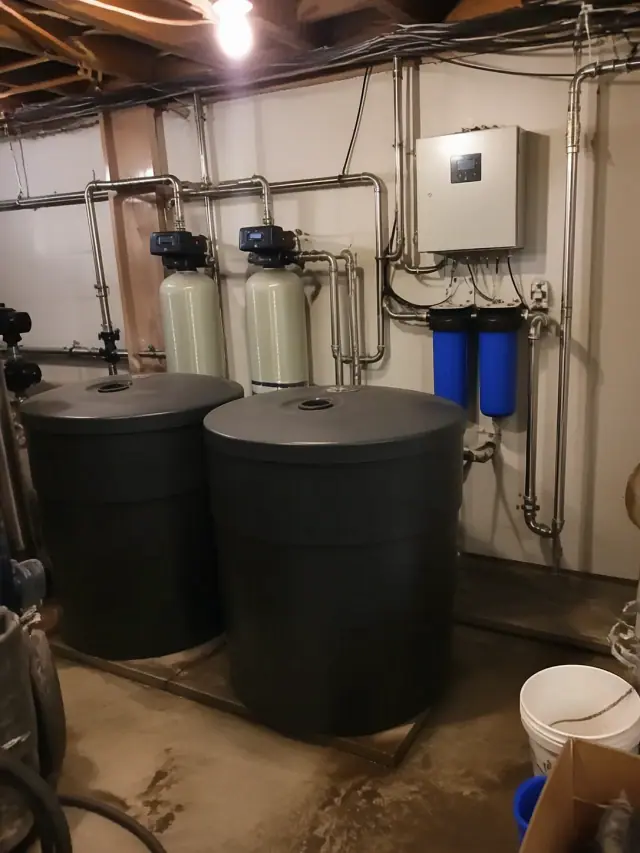
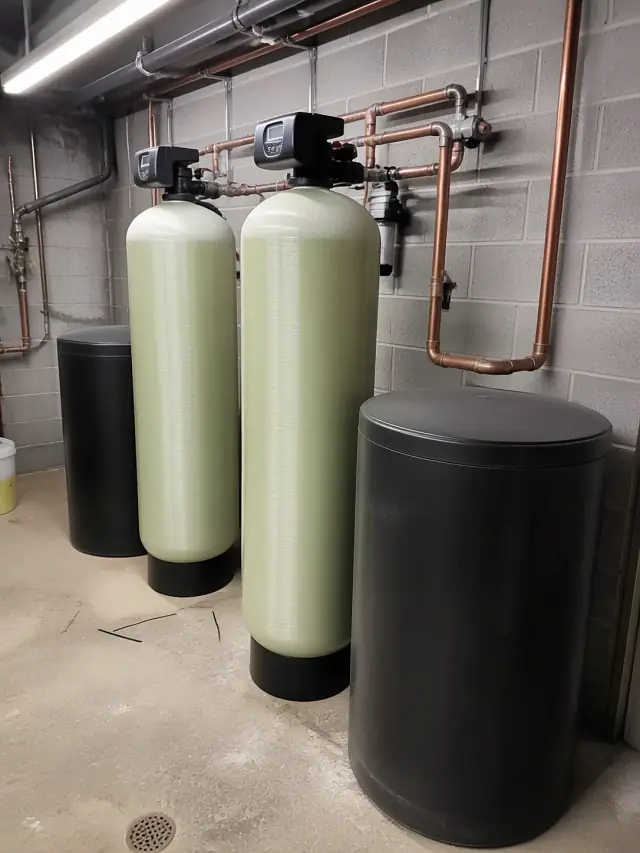
Commercial water softener system with two large brine tanks and copper piping in a mechanical room in Mesa, AZ.

We install high-capacity commercial softeners sized by grain capacity, peak flow rate, and regeneration cycle time. Systems can range from 40,000-grain units for smaller applications to multi-tank configurations exceeding 1,000,000 grains of total capacity for large hospitality, industrial, or multi-unit facilities.

Request Estimate

Whole-Building Water Softener Systems

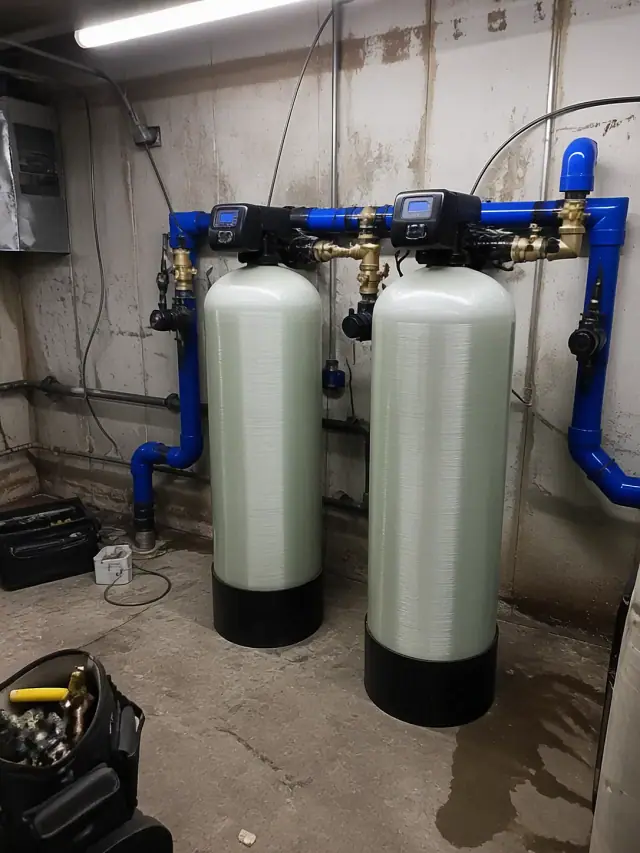
Commercial water softener tanks with blue piping and brass valves installed in a mechanical room in Mesa, AZ.

Whole-building systems treat water at the main entry point so every downstream fixture and water-using appliance receives conditioned water. This approach is ideal when your entire operation needs protection, from water heaters and restrooms to kitchens, laundry areas, and process equipment.

Request Estimate

Restaurant Water Softener Installation

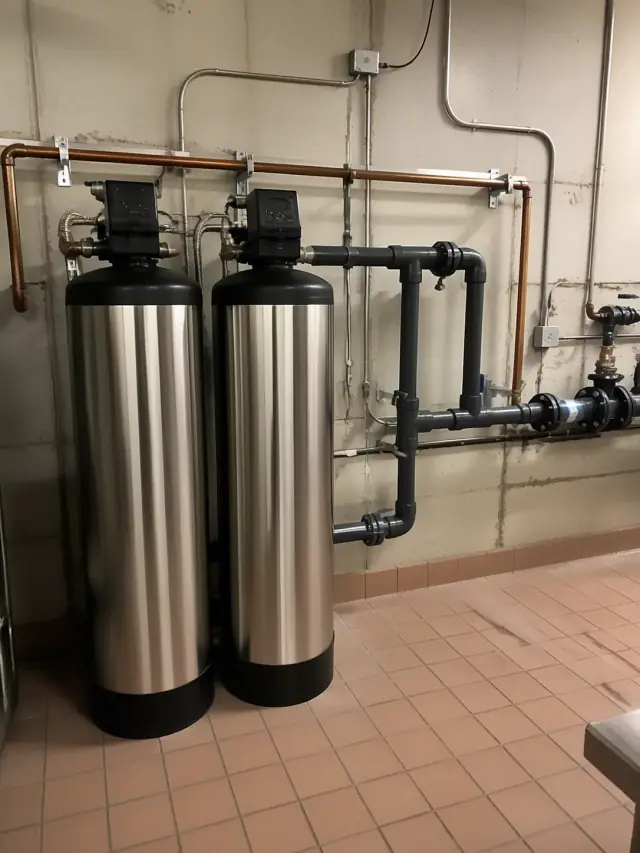
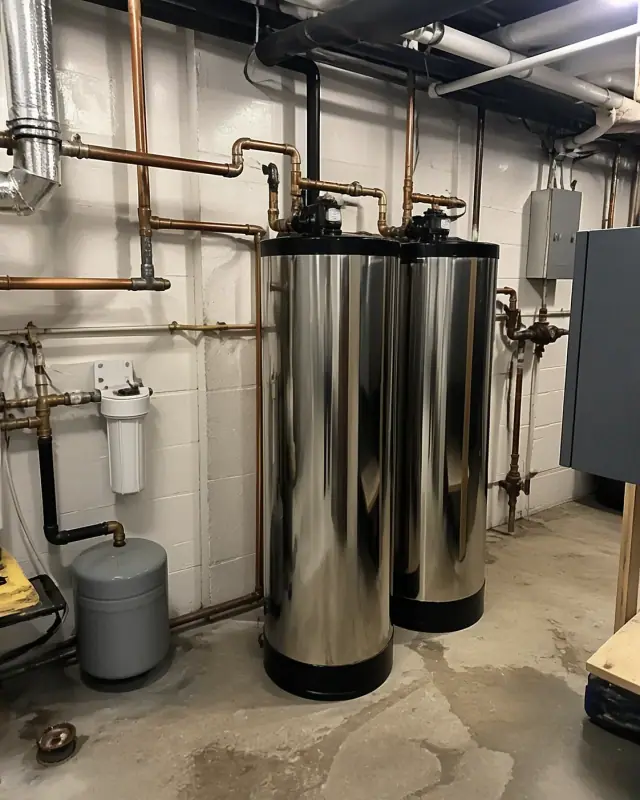
Two stainless steel water softener tanks installed in a commercial restaurant mechanical room in Mesa, AZ.

Restaurants rely on consistent water quality for dishwashing, ice production, steam equipment, coffee service, and beverage programs. A properly sized restaurant softener helps reduce spots on glassware, clogged spray arms, rinse-aid use, and the manual descaling that untreated Arizona water can require every few months.

Request Estimate

Hotel & Hospitality Water Softener Systems

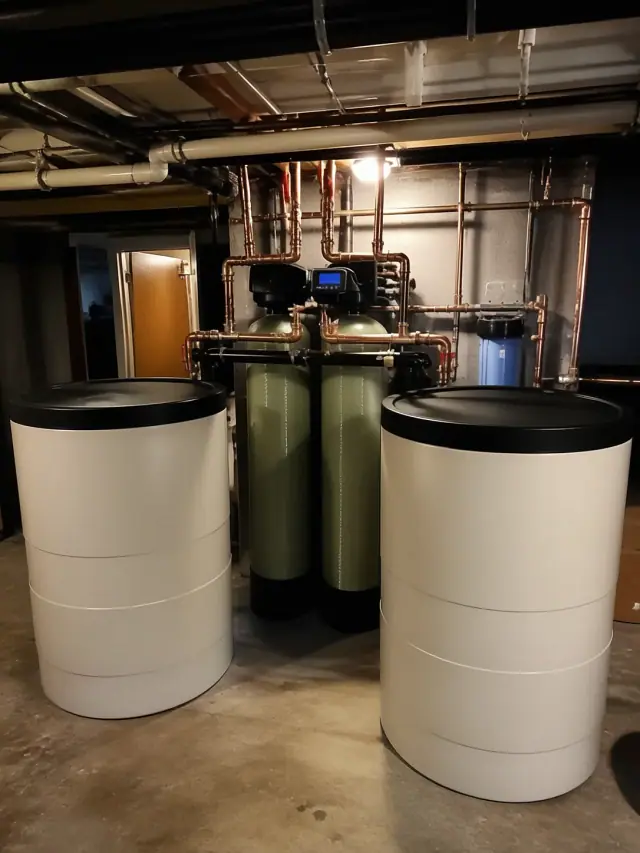
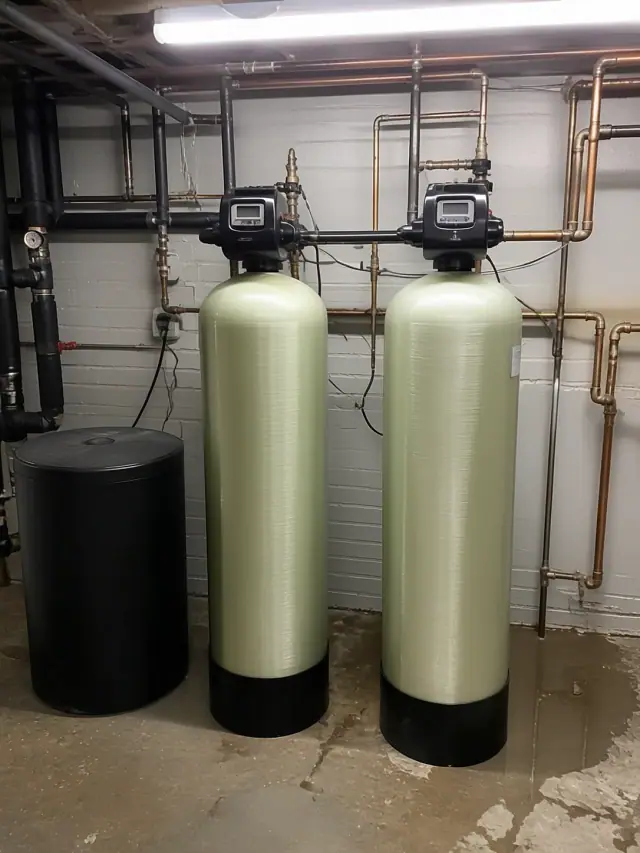
Commercial water softener system with copper piping installed in a basement mechanical room in Mesa, AZ.

Hotels need soft water even when guest showers, laundry, kitchens, pools, and water heaters are all drawing at once. For a 100-room hotel that may use 15,000 to 30,000 gallons per day, we specify duplex alternating systems so one tank can regenerate while another continues supplying soft water.

Request Estimate

Manufacturing Facility Water Treatment

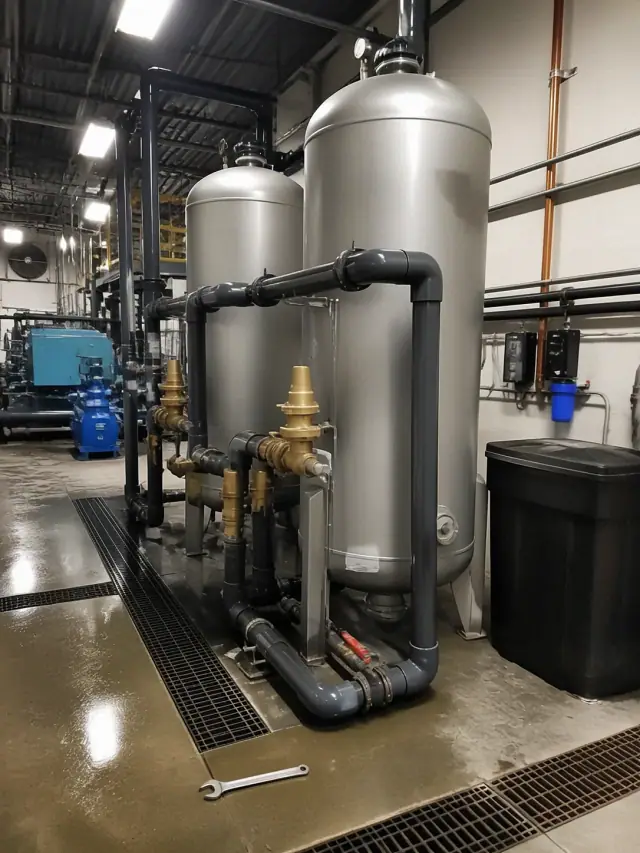
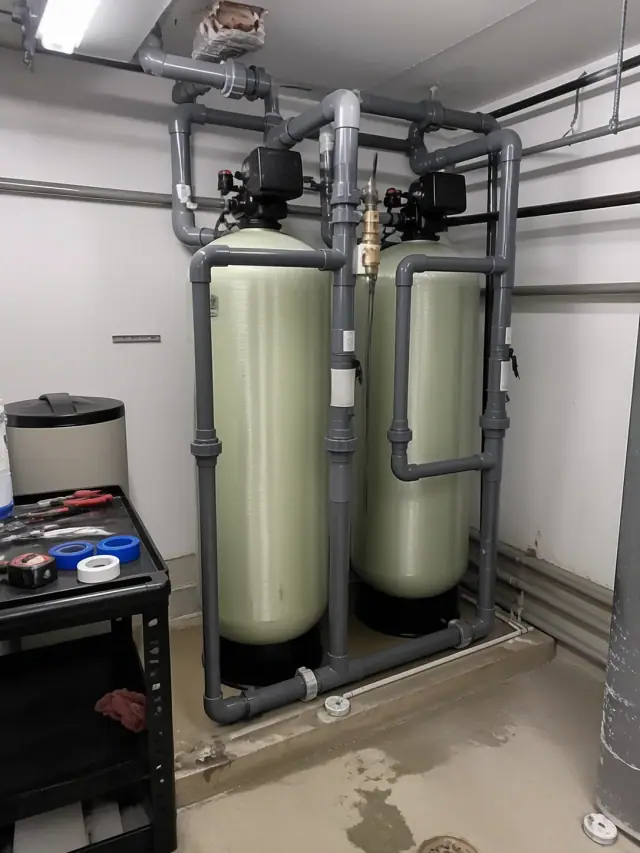
Industrial water softener installation with large steel tanks and PVC piping in a Mesa, AZ manufacturing mechanical room.

Manufacturing facilities near Mesa corridors such as Dobson Road, Ellsworth Road, and the Loop 202 may need water treatment for boiler feed, cooling systems, parts washing, or product formulation. We evaluate each process separately so hardness reduction, filtration, reverse osmosis, or other treatment stages match the actual water quality requirement.

Request Estimate

Commercial Water Softener Repair & Maintenance

Commercial water softener system with stainless steel pipes and brine tanks installed in a mechanical room in Mesa, AZ.

We service commercial softeners whether we installed the system or not, including major commercial control valves and resin tank configurations. Maintenance may include annual resin-bed inspection, brine tank cleanout, cycle-count-based valve service, salt schedule adjustments, and urgent support when a failed system cannot wait.

Request Estimate
Water Softener System Types

Types of Commercial Water Softener Systems

Mesa businesses may need a single high-capacity ion exchange softener, a twin-alternating system, a complete treatment train with carbon filtration and reverse osmosis, or a specialized conditioning setup. We match the system type to the facility's hardness level, flow demand, uptime needs, drain access, salt logistics, and final water-quality target.

Commercial water softener installation with PVC piping in a mechanical room in Mesa, AZ.

Ion Exchange Water Softeners

Ion exchange is the standard choice when a business needs true soft water. The resin bed swaps calcium and magnesium hardness minerals for sodium ions, reducing hardness near zero before the water reaches equipment or fixtures.

  • Physically removes hardness minerals rather than only altering how they behave.
  • Best fit for Mesa hardness that routinely reaches 16 to 25 grains per gallon.
  • Protects boilers, water heaters, dishwashers, ice machines, and other scale-sensitive equipment.
  • Uses brine regeneration to restore resin capacity for the next service cycle.
  • Available with 10% crosslink resin that resists chlorine better than standard 8% crosslink material.
Request System Estimate
Commercial water softener system with copper piping installed in a mechanical room in Mesa, AZ.

Demand-Initiated Regeneration Systems

Demand-initiated regeneration tracks how much treated water has actually passed through the resin bed. Instead of regenerating on a fixed timer, the control valve starts the cleaning cycle only when capacity is genuinely being exhausted.

  • Reduces wasted salt from unnecessary regeneration cycles.
  • Cuts backwash and brine-rinse water use compared with timer-only controls.
  • Adjusts better to seasonal demand changes and irregular commercial schedules.
  • Helps extend resin-bed life by avoiding needless cycling.
  • Provides more consistent soft-water output during high-volume operation.
Request System Estimate
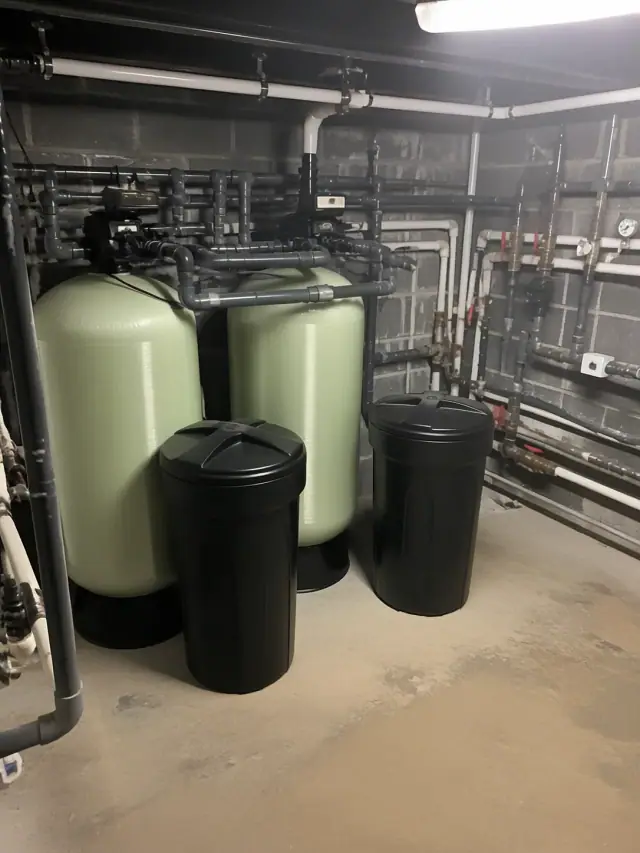
Commercial twin-tank water softener installation with industrial piping in a mechanical room in Mesa, AZ.

Twin-Alternating & Multi-Tank Systems

Twin-alternating, duplex, and triplex systems are designed for businesses that cannot pause soft water service during regeneration. One tank remains online while another regenerates, supporting continuous commercial operation.

  • Ideal for hotels, commercial kitchens, laundromats, and industrial facilities with uptime requirements.
  • Maintains treated water during regeneration instead of sending hard water downstream.
  • Supports 24/7 operating environments when equipment is sized and programmed correctly.
  • Can be expanded for higher peak flow and daily water volume.
  • Uses commercial-duty valves and larger brine systems built for frequent cycling.
Request System Estimate
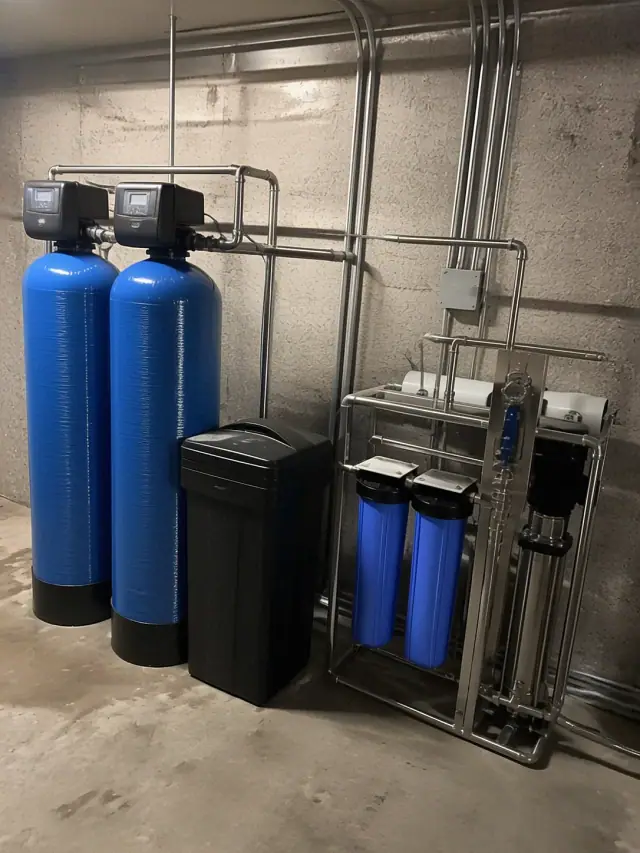
Commercial water softener and reverse osmosis system installation in a mechanical room in Mesa, AZ.

Softener & Reverse Osmosis Integration

Some businesses need softened water plus further purification for beverage service, laboratory use, manufacturing, or other high-quality water applications. In those cases, we integrate softening with reverse osmosis and supporting filtration stages.

  • Softening upstream of RO reduces membrane scaling risk.
  • RO can lower total dissolved solids and polish water for specific use points.
  • Carbon filtration can be added before softening to address chlorine where needed.
  • Point-of-use or process RO can be paired with whole-building softening.
  • Useful for restaurants, breweries, medical facilities, and precision manufacturing needs.
Request System Estimate
Two stainless steel water conditioner tanks with new copper plumbing installed in a mechanical room in Mesa, AZ.

Saltless Commercial Water Conditioners

Saltless commercial conditioners can reduce the tendency of hardness minerals to adhere to surfaces, but they do not remove hardness or reduce total dissolved solids. We consider them only when the application fits their limitations.

  • Use no salt, brine discharge, or regeneration electricity.
  • Do not create true soft water or reduce hardness to near zero.
  • May be considered for supplemental or limited-scale applications.
  • Less suitable as the primary treatment for Mesa sites above 20 grains per gallon.
  • Best evaluated after testing hardness, flow demand, and equipment sensitivity.
Request System Estimate
Finding Your Right Fit

Choosing the Right Commercial Water Softener System

The right system depends on the water at your address, not a generic category label. In Mesa, where the city served a 2020 census population of 504,258 and source water can vary by district and season between Salt River Project surface water and groundwater blends, we size equipment from your tested hardness, peak flow, daily volume, equipment sensitivity, and available plumbing space.

Custom Water Testing First

We test hardness, chlorine, iron, pH, and sediment before recommending equipment. That keeps the installation focused on the real conditions in your building and helps avoid paying for treatment you do not need.

Mesa Water Quality Expertise

Mesa water meets drinking-water standards, but regulatory compliance does not prevent scale in commercial equipment. We account for the City of Mesa and Salt River Project supply context, seasonal source blending, and the local hardness profile when designing a system.

Licensed Commercial Plumbing Installation

Commercial plumbing work in Arizona must be handled by properly licensed plumbers and installed to code. Our installations are built with clean layouts, secure connections, bypass valves, pressure testing, and permit coordination where required.

What Sets Us Apart

Why Choose Us for Commercial Water Softener Installation?

Mesa Water Softeners combines local hard-water knowledge with commercial-grade equipment selection and professional installation practices. From the first test through startup, programming, and staff training, we focus on long-term reliability instead of one-size-fits-all equipment sales.

Get a Free Water Test

Scale in Water Heaters & Boilers

Hard water leaves calcium and magnesium deposits on heating surfaces, reducing heat transfer and forcing equipment to work harder. In commercial boilers, scale can also create pressure and reliability concerns that deserve prompt attention.

Spotted Glassware & Dish Machine Problems

Commercial dishwashers can show hard-water damage through cloudy plates, spotted glassware, clogged spray arms, and higher chemical use. Softened water helps kitchens produce cleaner results and reduce scale-related sanitation headaches.

Reduced Flow from Scaled Piping

Mineral deposits accumulate on pipe walls over time and can shrink the effective inside diameter of plumbing. That restriction can lower flow rates just when your facility needs steady water pressure during peak demand.

Laundry, Linen & Detergent Waste

Hotels, laundromats, and other laundry-heavy operations use more detergent and energy when hard water and scale interfere with washing and heating. Soft water helps protect linens, reduce detergent waste, and support more consistent wash results.

Process Water Quality Variability

Manufacturing and medical applications often need tighter water quality than basic hardness reduction alone can provide. Seasonal source-water blending, sediment, chlorine, iron, and total dissolved solids may all affect the treatment train your operation needs.

Salt Bridges, Resin Fouling & System Downtime

Commercial systems need routine attention because salt bridging, brine tank mushing, resin fouling, valve wear, or programming issues can disrupt regeneration. Monitoring salt use, cycle history, and outlet water quality helps catch problems before hard water reaches protected equipment.

How it works

Our Commercial Water Softener Process

Our installation process is built to remove guesswork. We test the water, calculate demand, inspect the site, select the right equipment, install to commercial plumbing standards, and verify performance before your team takes over daily operation.

01.

Custom Water Testing

We measure hardness in grains per gallon and check iron, chlorine, pH, and sediment at your facility. We also review relevant municipal water quality context so the recommendation starts with your actual supply conditions.

02.

Flow-Rate & Volume Sizing

We calculate peak gallons-per-minute demand and daily water volume before selecting equipment. Sizing by peak demand helps prevent pressure drops or partially treated water during your busiest operating periods.

03.

Site & Plumbing Assessment

We inspect available floor space, plumbing configuration, drain capacity, electrical access, and salt storage logistics. This step also identifies whether a bypass arrangement or multi-tank layout is needed to keep water available during service.

04.

Equipment Selection

We match the resin tank size, brine system, control valve, regeneration style, and optional filtration or reverse osmosis stages to your water test and facility requirements. The goal is reliable treatment without oversizing or undersizing the system.

05.

Professional Installation

Licensed commercial plumbers install the system with clean pipe routing, proper shutoff valves, secure connections, and code-aware workmanship. Connections are pressure-tested and permit coordination is handled where the project requires it.

06.

Startup, Training & Support

After installation, we commission the system, verify outlet water quality, and review salt loading, regeneration settings, documentation, and error-code basics with your staff. We remain available for maintenance, troubleshooting, and programming adjustments as your water use changes.

Get Better Water

Schedule a Commercial Water Softener
Consultation

Start with a free water test and site consultation for your Mesa facility. We will identify your hardness level, review equipment risks, recommend an appropriately sized commercial system, and provide an upfront estimate for installation.

Service Help

Commercial Water Softener FAQs

These answers cover common questions from Mesa businesses comparing commercial water softener systems, installation requirements, pricing factors, maintenance, and long-term equipment protection.

Call Our Experts

The main differences are capacity, construction, and duty cycle. A residential softener usually supports about 7 to 10 gallons per minute and may regenerate once or twice per week, while a commercial system is built for higher flow, frequent cycling, and daily or even multiple-daily regeneration. Many commercial applications also use twin-alternating or multi-tank designs so one tank can regenerate while another keeps supplying treated water.

Residential pricing benchmarks can range broadly from about $500 to $3,300 depending on system type, site conditions, and what is included. A common 32,000-grain salt-based system is often cited around $950 to $1,275, with some installed benchmarks around $1,100 to $1,275, and many homeowners around $1,500; well-water residential setups may run about $1,650 to $3,300. Commercial systems start above residential pricing, with small commercial projects often around $2,500 to $5,000 and duplex or triplex systems for larger facilities ranging from $5,000 to $20,000 or more.

Yes. Commercial water softener installation that connects to a building plumbing system must be performed by an appropriately licensed plumber under Arizona Registrar of Contractors requirements. Unlicensed work can create inspection, warranty, and liability problems.

Many commercial installations do require permit coordination because they modify the building water supply with main-line connections, bypass valves, or other plumbing changes. Arizona plumbing work follows the Arizona Plumbing Code, which uses the Uniform Plumbing Code as its base standard, and Mesa projects may involve the City of Mesa Development Services Department. We handle permit coordination where it applies to the project scope.

Food service, hotels, laundromats, medical and dental offices, manufacturing facilities, car washes, breweries, and office buildings with central HVAC or water-heating systems can all benefit. The strongest business case usually appears where hard water touches expensive equipment, affects cleaning quality, or changes a production process.

A properly specified, professionally installed, and regularly maintained commercial water softener can often provide 15 to 20 years of reliable service. Resin beds commonly last 10 to 15 years when protected from fouling and excessive chlorine exposure, while neglected systems may fail in under five years. Maintenance is a major part of getting the full life from the equipment.

Yes. Installing a softener upstream of reverse osmosis removes hardness before it can foul the RO membrane, which helps extend membrane life in Mesa's high-hardness water. The softener handles bulk hardness removal, while RO can reduce total dissolved solids and polish water for beverage, lab, medical, or manufacturing use points.

We size the system from tested water hardness, peak gallons-per-minute demand, daily water volume, regeneration timing, and uptime requirements. Peak demand matters more than average demand because the system must keep up during the busiest part of your day. We also consider drain capacity, floor space, electrical access, salt storage, and whether your operation needs a bypass or multi-tank design.

Salt-based ion exchange is the only option that actually softens water by removing calcium and magnesium hardness. Saltless conditioners can reduce the tendency of minerals to adhere to surfaces, but they do not reduce hardness or total dissolved solids. For many Mesa commercial applications above 20 grains per gallon, ion exchange is the primary treatment we recommend, with saltless conditioning considered only for specific supplemental uses.

We test hardness in grains per gallon and check for chlorine, iron, pH, and sediment. We also consider municipal water quality information from the City of Mesa or Salt River Project when it helps explain local source-water variation. That testing lets us recommend a system based on your building rather than a generic Mesa average.

Timer-based systems regenerate whether the resin bed needs it or not, which can waste salt and water. Demand-initiated controls track actual usage and regenerate only when capacity is being exhausted. For a Mesa business paying for water and sewer, fewer unnecessary cycles can reduce operating costs while still delivering consistent soft water.

Yes. We service major commercial control valve brands and resin tank configurations whether we installed the system or not. Support may include troubleshooting, resin inspection, brine system cleaning, salt-use review, programming adjustments, and urgent service when hard water is reaching protected equipment.

Commercial systems should have resin beds inspected annually for fouling, fracturing, or iron contamination. Control valves and seals should be serviced based on cycle count in high-volume applications, and brine tanks need periodic cleanout to prevent salt bridges and mushing. Monitoring regeneration frequency, outlet water quality, and salt consumption helps catch problems early.